Work shifts in Italy: how to plan them within the rules
How to organise employee shifts in Italy: 11-hour rest, breaks, weekly rest, night work and how to keep hours and shifts aligned.
Published 2 min read
Organising shifts feels like a puzzle: who covers Saturday? Who closes tonight and who opens tomorrow morning? Yet there are only a few legal limits to respect, and knowing them makes the work much simpler. This guide lays out the rules and the methods that work.
The basic rules (Legislative Decree 66/2003)
- Daily rest: at least 11 consecutive hours in every 24. If an employee finishes at 23:30, they can’t start the next day before 10:30.
- Break: if the shift exceeds 6 hours, a break is due; the CCNL sets its length and, failing that, it is at least 10 minutes.
- Weekly rest: at least 24 consecutive hours every 7 days, normally on Sunday.
- Maximum duration: on average no more than 48 hours a week, overtime included.
- Night work: the night period covers at least 7 consecutive hours between midnight and 5am. For night workers, normal hours can’t exceed an average of 8 hours in 24.
Collective agreements and company agreements can provide more favourable rules, and they also set how much notice shifts must be given.
How to plan well
- Start from each person’s contract hours: weekly hours and working days.
- Share the less popular slots fairly (weekends, closing shifts, holidays) with a clear rotation.
- Check the rest between one day’s close and the next day’s opening.
- Account for vacation and leave already approved before announcing shifts.
- Announce in advance and in one place, to avoid unrecorded swaps.
- Record real hours: the planned shift isn’t always the one worked.
The most frequent mistakes
- Shifts that differ from reality: the schedule on paper isn’t what was worked.
- “Close then open” without the 11 hours of rest.
- Shift swaps made verbally and not recorded.
- Overtime found only at month end, because real hours weren’t checked during the month.
- Shift calendar and vacation calendar kept apart, with overlaps.
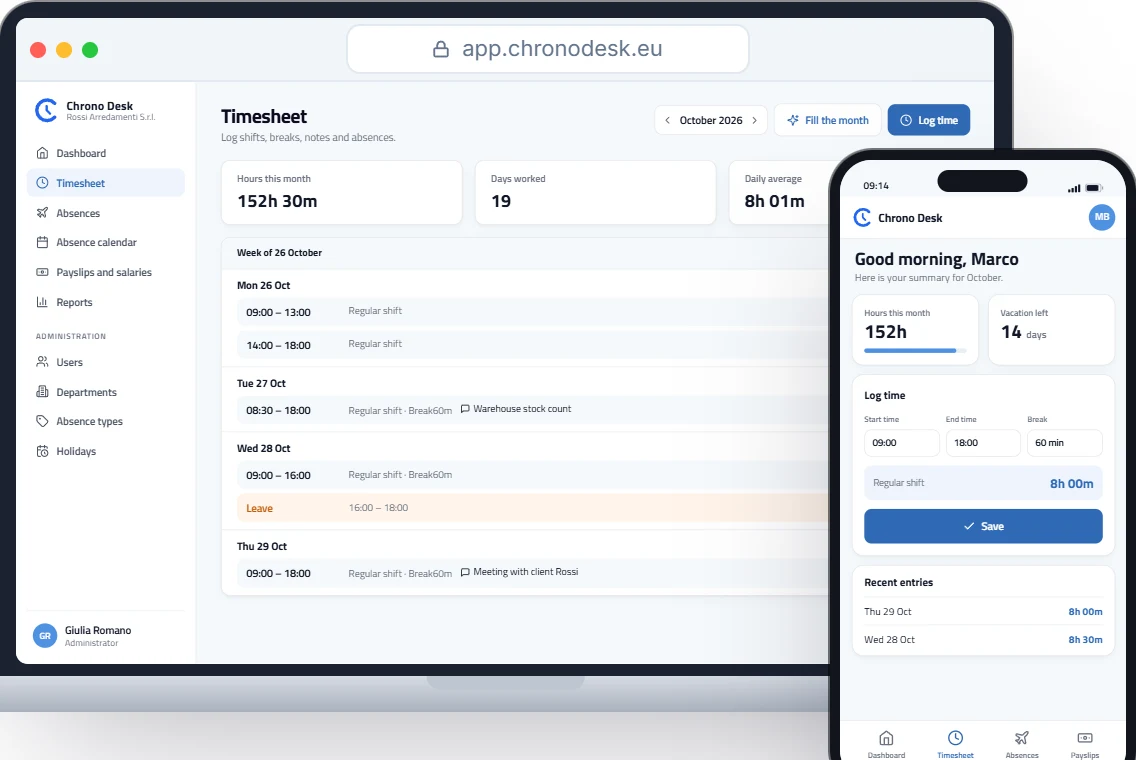
When the planned shift and the real one live in different places, someone has to rebuild everything at month end. The simplest method is to record real hours every day: for the set-up read the guide on timesheets and on how overtime works.
How Chrono Desk does it
Chrono Desk doesn’t plan shifts for you, but it helps you keep them aligned with real hours:
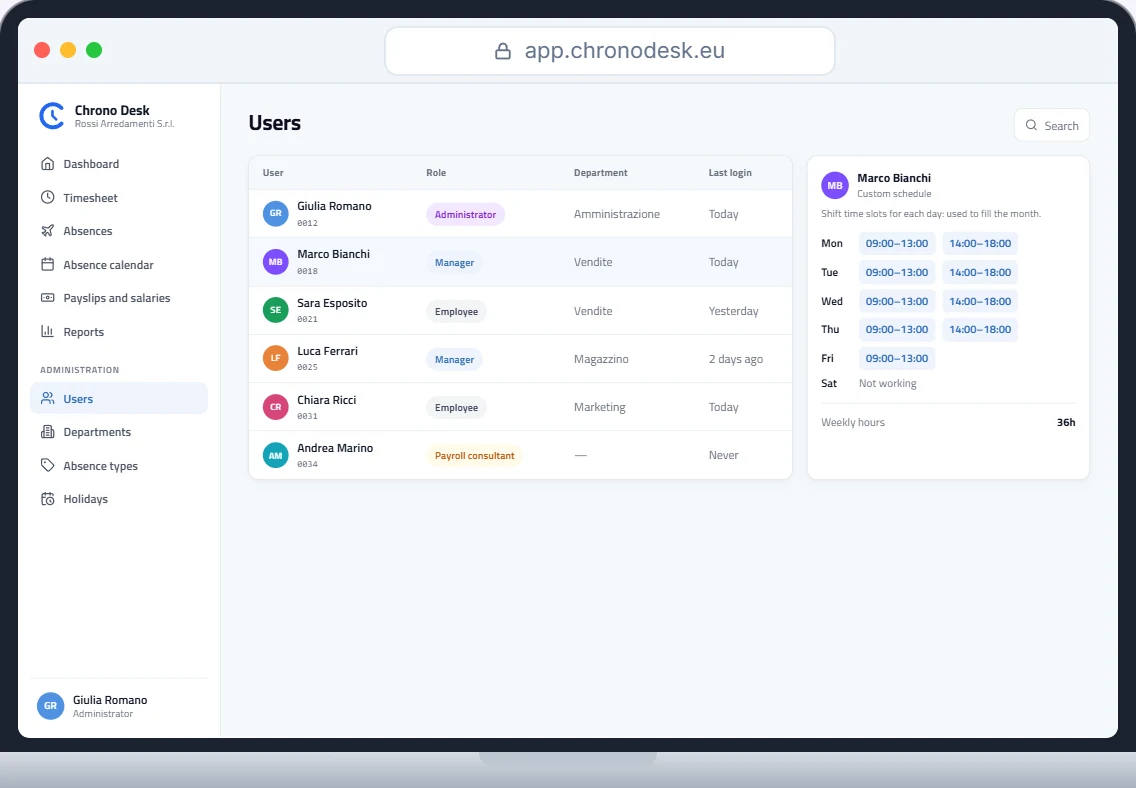
- for each employee you set contract, weekly hours and a custom schedule with the slots for each day, including several slots in one day (split shifts);
- with “Fill the month” the timesheet starts from the expected schedule and only exceptions need fixing;
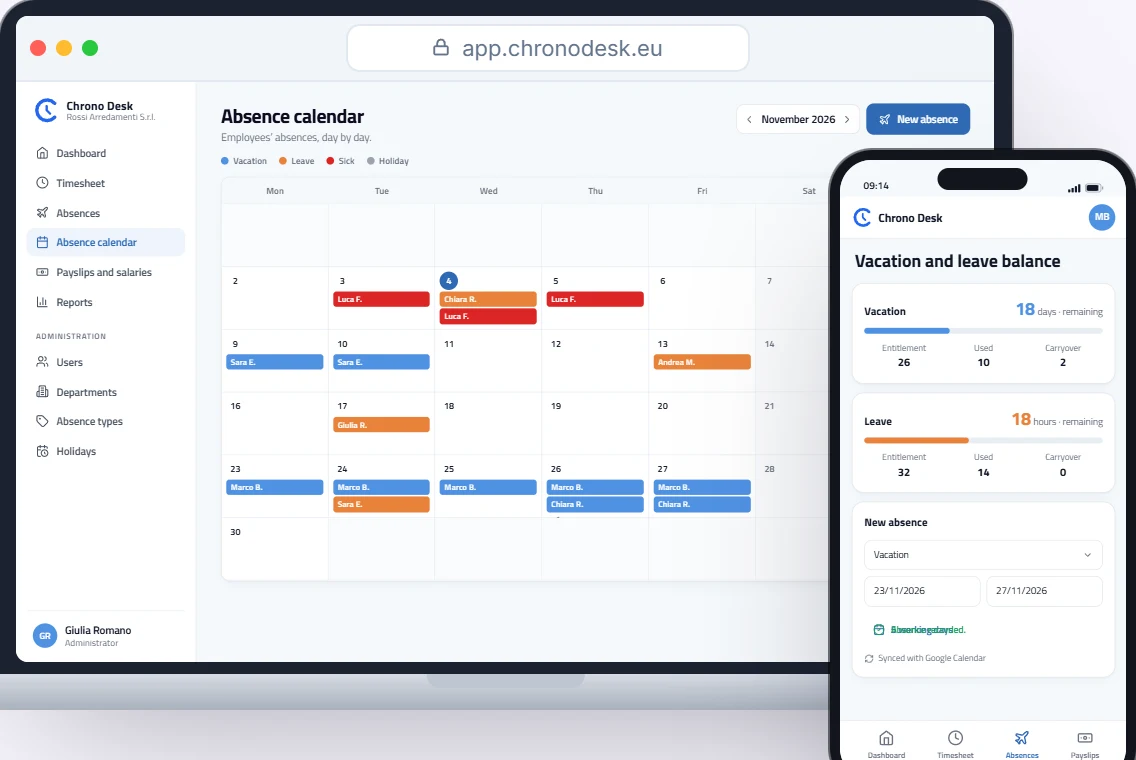
- vacation, leave and holidays live in the same calendar;
- managers see their team’s hours and absences.
Want to see it in action? Talk to us.
This guide is for information only and does not replace advice from your payroll consultant or the rules of your collective agreement.